How a month of field visits, vendor interviews and beneficiary conversations shaped a Phase 2 roadmap for 4,000 tribal households in Tamil Nadu
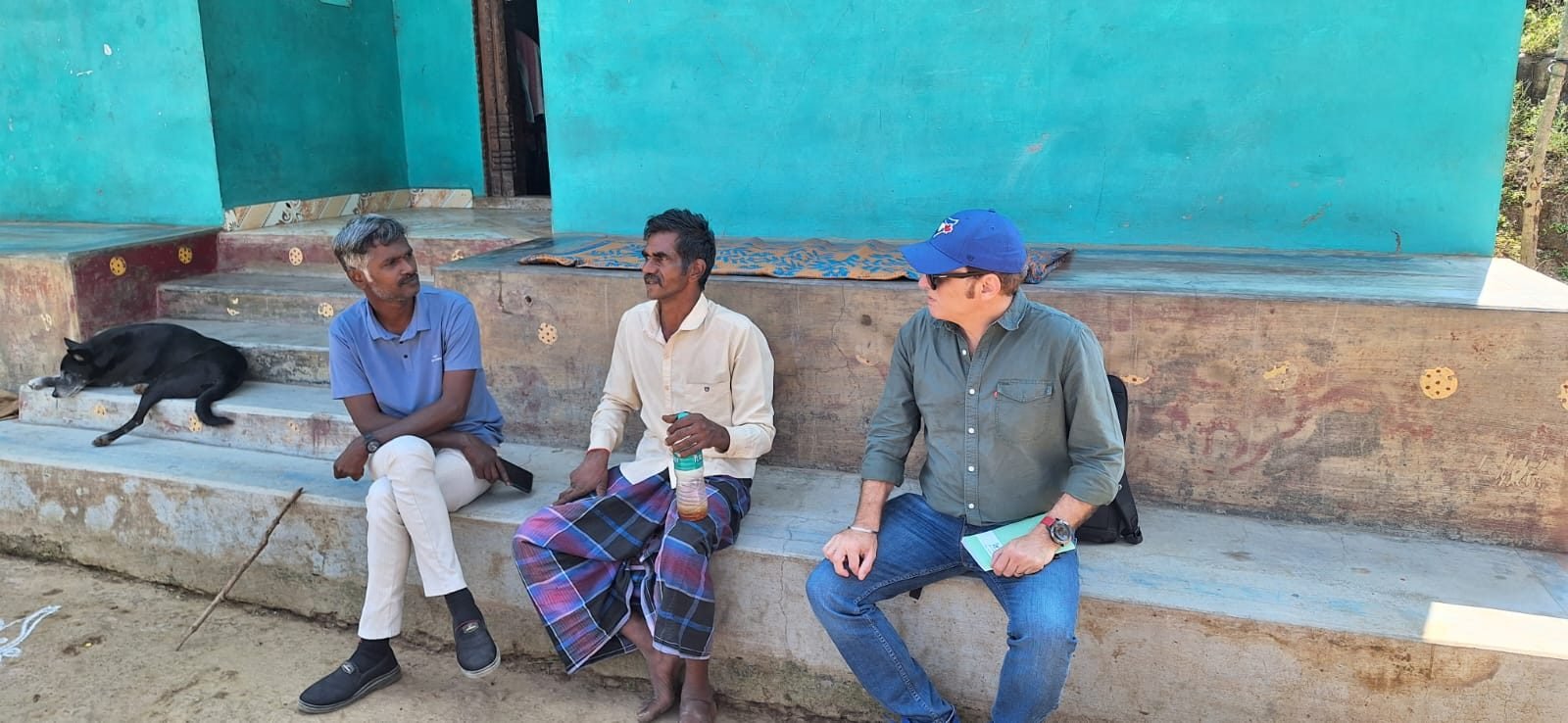
Sitting down with village elders and beneficiaries in Jawadhu Hills as part of the field assessment.
In January 2025, a small team set out into the Jawadhu Hills – a remote stretch of the Eastern Ghats straddling Vellore and Tiruvannamalai districts, home to the Malayali tribal community – to answer two deceptively simple questions. Was a three-year livelihoods programme actually working? And if it was, what would it take to make it work for ten times as many families?
The programme in question was the Latchathapati Vivasayi (LV) Project, run by the RGR Cell of Tamil Nadu Agricultural University with support from Tata Trusts and Titan Company. Over three years, it had reached 200 tribal households across 10 villages through goat-rearing, vegetable cultivation and the sale of forest produce. Our brief was to independently validate what had been achieved, understand what beneficiaries actually needed next, and build the market and financial case for scaling the model to 50 villages and roughly 4,000 households.
This is a short account of how that exercise was actually carried out – the fieldwork, the conversations, and the market research that went into it.
Starting on the ground, not in a spreadsheet
Before any data was analysed, the team spent close to two weeks in Jawadhu Hills itself – visiting the RGR Cell’s field office, walking farms, and sitting with beneficiaries in their villages. Five villages were selected for close study – Amaranthus, Kuriyanoor, Periyakollai, Arsavalli and Komutteri – chosen to capture the range of conditions across the hills: proximity to forest, access to irrigation infrastructure, and how long each village had been part of the programme.
From a pool of over 100 programme participants, a sample of more than 20% – 22 women identified as having crossed the Latchathapati Vivasayi (LV) income threshold, plus 4 non-LV participants for comparison – were interviewed one-on-one, using a structured survey tool built and pre-tested with the programme team. Each conversation covered income from every source – goat sales, vegetable plots, honey and tamarind, and non-programme work such as MGNREGS labour – cross-checked where possible against local market prices gathered directly from wholesale vendors in the region.
Those vendor conversations turned out to be as valuable as the beneficiary interviews. A goat trader who has worked the Jawadhu Hills circuit for over a decade explained exactly how mortality and market weight move procurement prices. A grain merchant broke down why the price of little millet had fallen from Rs. 45 to Rs. 35 a kilogram in a single season. These ground-level economics – not survey averages – became the backbone of the income calculations in the final report.
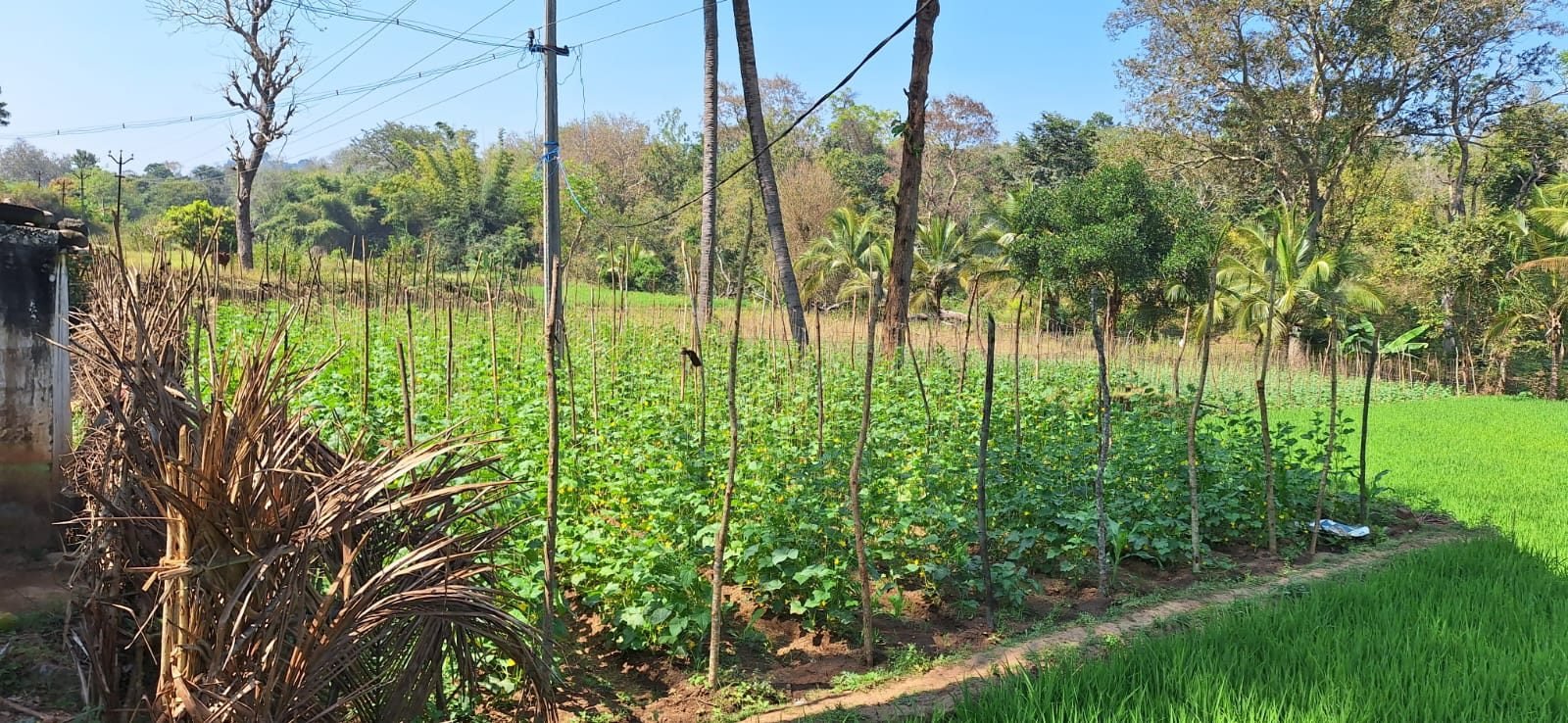
Trellis-based vegetable cultivation, one of the interventions assessed on the ground.
Mapping six value chains, commodity by commodity
Once the Phase 1 picture was clear, the exercise shifted to a forward-looking question: which commodities could realistically carry a much larger programme? Six were studied in depth – honey, custard apple, little millet, horse gram, tamarind and milk – each through the same lens: current production and quality in Jawadhu Hills, the institutions and companies already active in that space, and where the real bottlenecks sat, whether in agri-extension, cold storage, processing capacity or market access.
This meant visits well beyond the hills themselves – to processors like Divine Pure, research and testing institutions including CFTRI Mysore and TNAU Coimbatore, and companies such as Jawadhu Fresh, to understand alternate supply routes for local produce. For honey specifically, a competitor mapping exercise compared four active players on processing capacity, pricing and sales channels – the kind of detail that shapes a realistic business plan rather than an aspirational one.
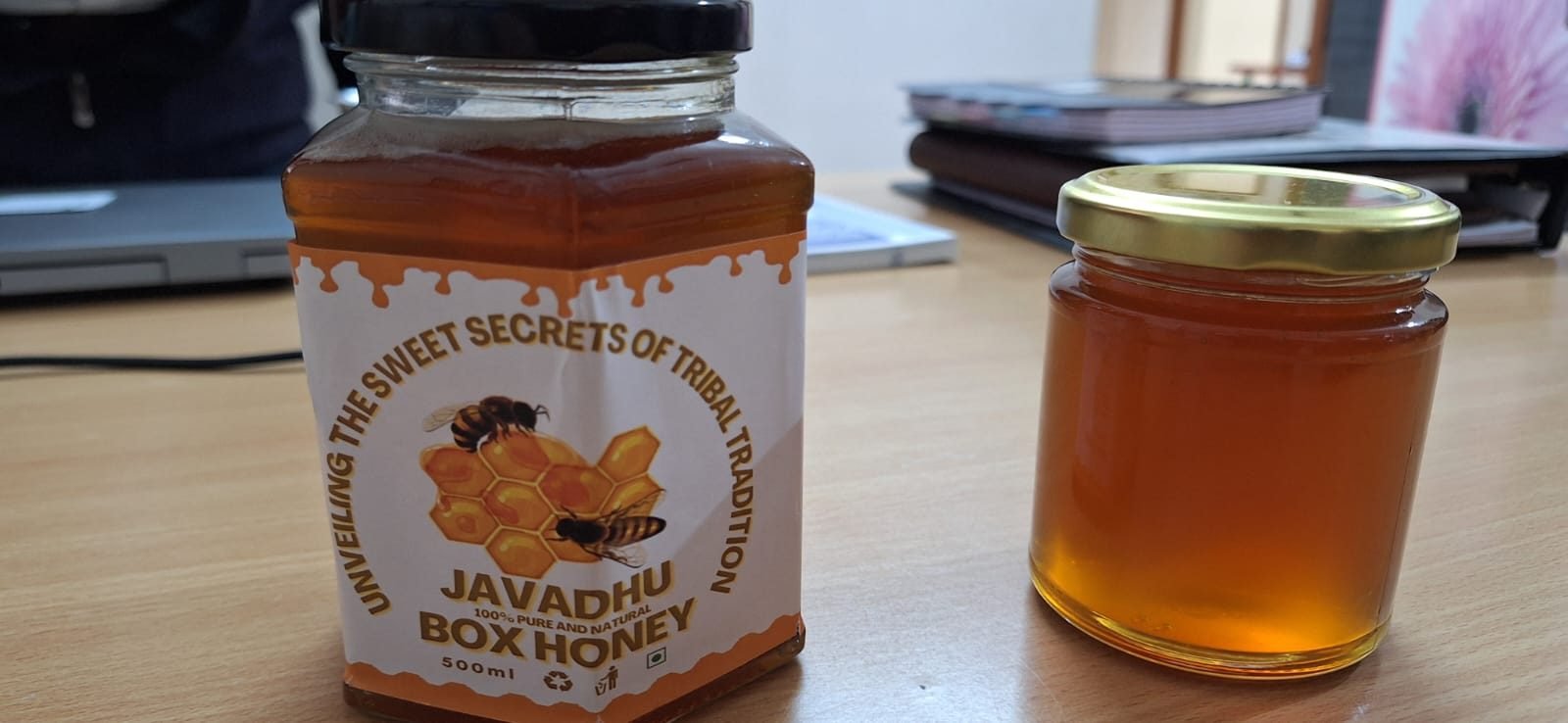
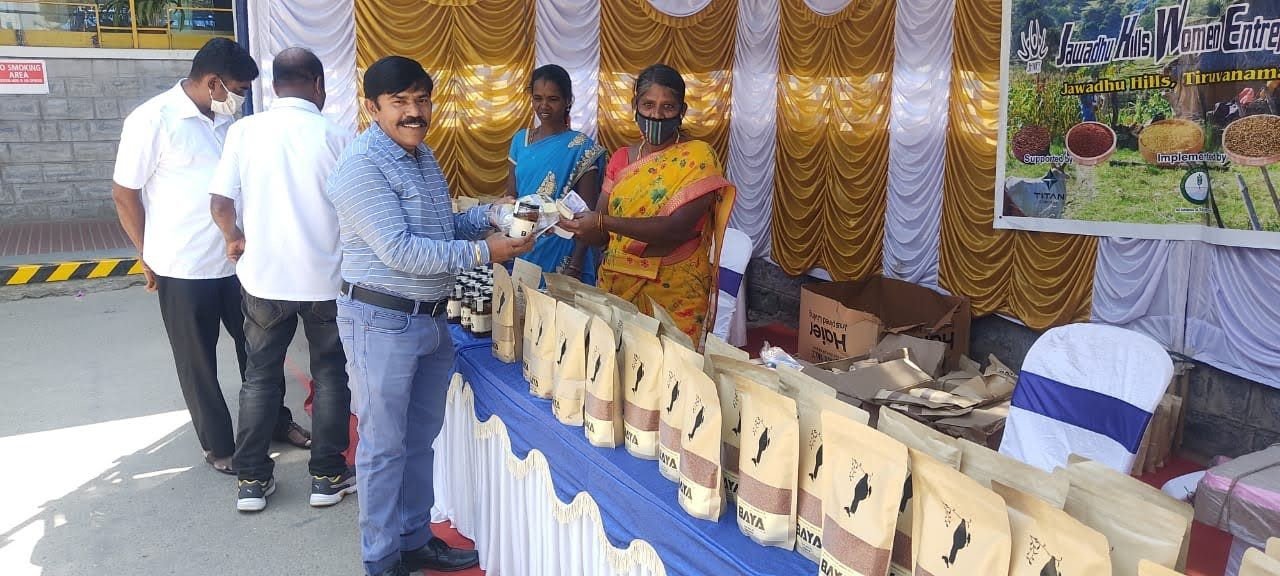
Existing honey products from Jawadhu Hills examined as part of the value-chain and competitor study.
What the numbers said
The clearest finding was also the simplest: goat-rearing works. More than half of the surveyed beneficiaries had crossed Rs. 1 lakh in annual income from goat-rearing alone, with income compounding from the second year onward as herds grew. Vegetable cultivation on trellises and the sale of forest produce like honey and tamarind added meaningfully on top – averaging roughly Rs. 10,000 and Rs. 4,000 per beneficiary respectively – but it was livestock that moved households across the income line.
Just as important was what beneficiaries said unprompted. Several described using the additional income to buy productive assets – a tractor, a camera and studio equipment for a spouse’s new business, a spell of jewellery as savings. Community institutions – the Producer Groups formed under the programme – had kept meeting, saving and lending internally even while the umbrella Federation worked through a legal dispute, a sign the model’s foundations were holding even under stress.
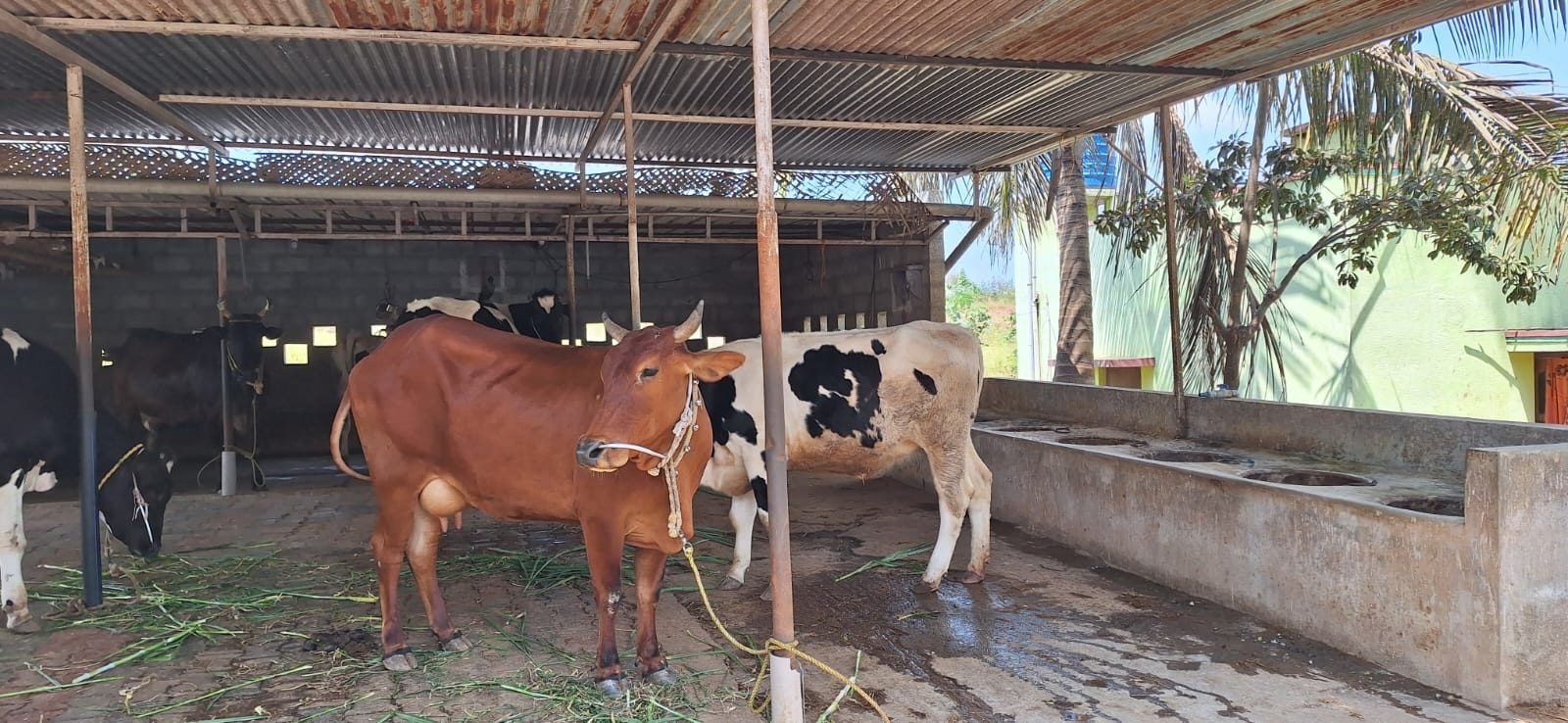
Livestock – goat-rearing and, increasingly, dairy – emerged as the strongest lever for household income.
Turning findings into a roadmap
The final stage of the exercise was translating all of this – field interviews, vendor economics, institutional mapping and competitor analysis – into a concrete three-year plan: a village-saturation approach across 50 villages, a dedicated honey value chain with its own processing facility and revived branding, a stronger agricultural extension system, and a phased partnership with an established milk producer company to convert strong, existing farmer interest in dairy into a structured income stream.
It is, in the end, a plan built less on assumption than on several hundred hours of conversations – with beneficiaries, vendors, processors and researchers – in and around the Jawadhu Hills. That grounding is what the team set out to protect throughout the exercise, and what the resulting Phase 2 plan is built on.
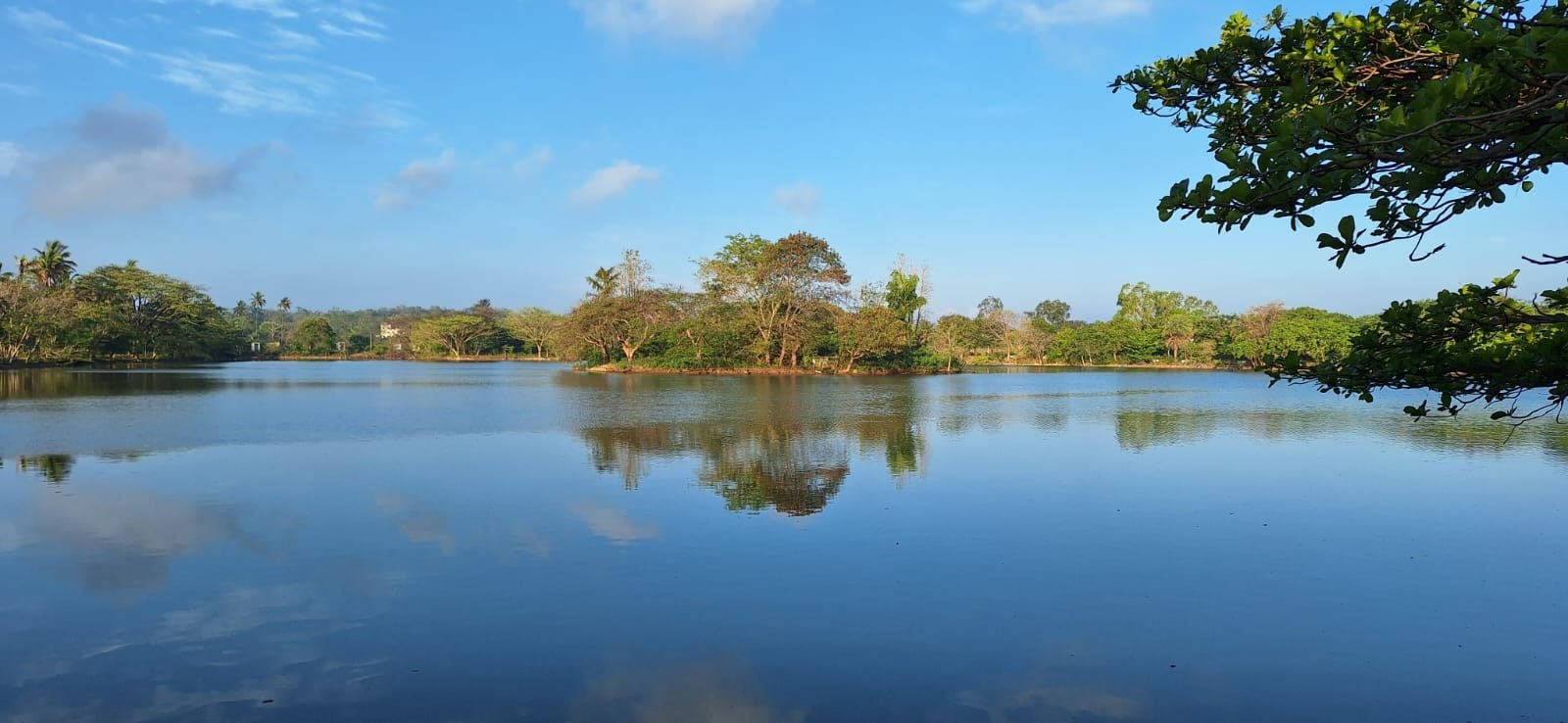
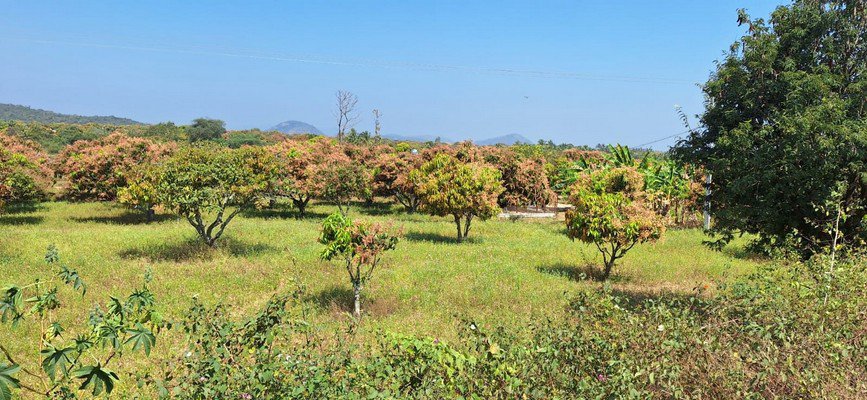
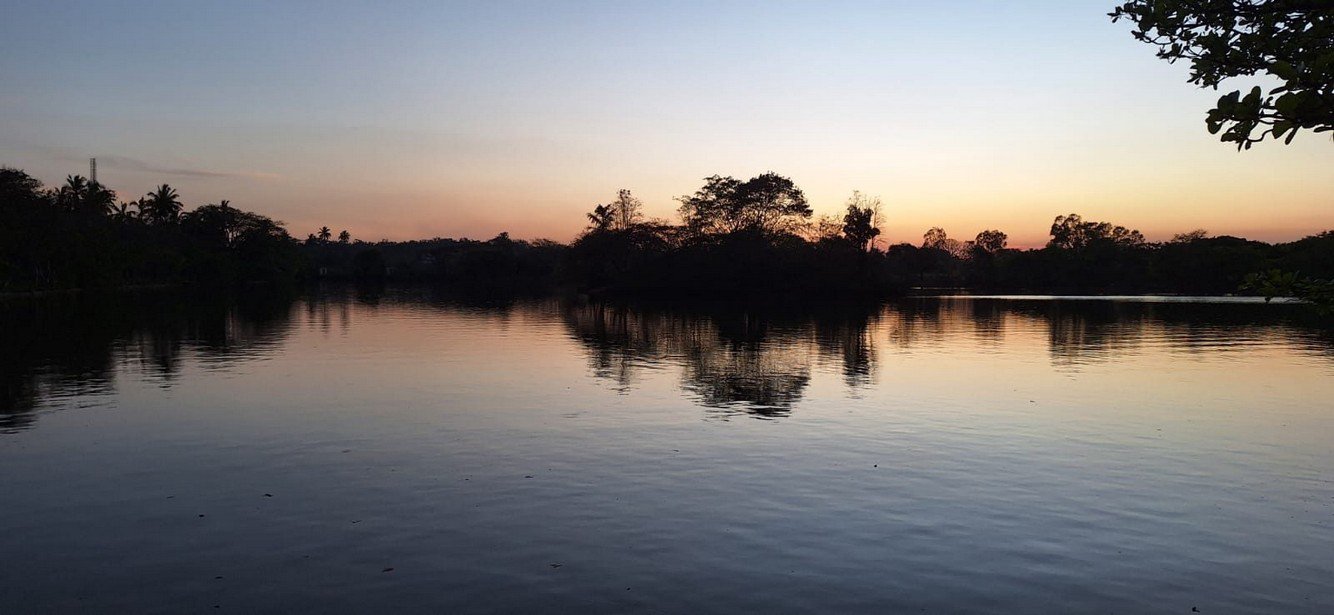
The Jawadhu Hills landscape that this work is rooted in.
The full Impact & Needs Assessment and Market Study report, including the detailed value-chain analysis and Phase 2 business plan, is available on request from P-Green Solutions & Innovations.
Jawadhu Hills – Executive Summary