CML , GUWAHATI: Field Notes from Assam: Inside CML’s Livelihoods and Water Security Programmes
Kamrup Rural & Nalbari districts, Assam | 22–23 April 2026
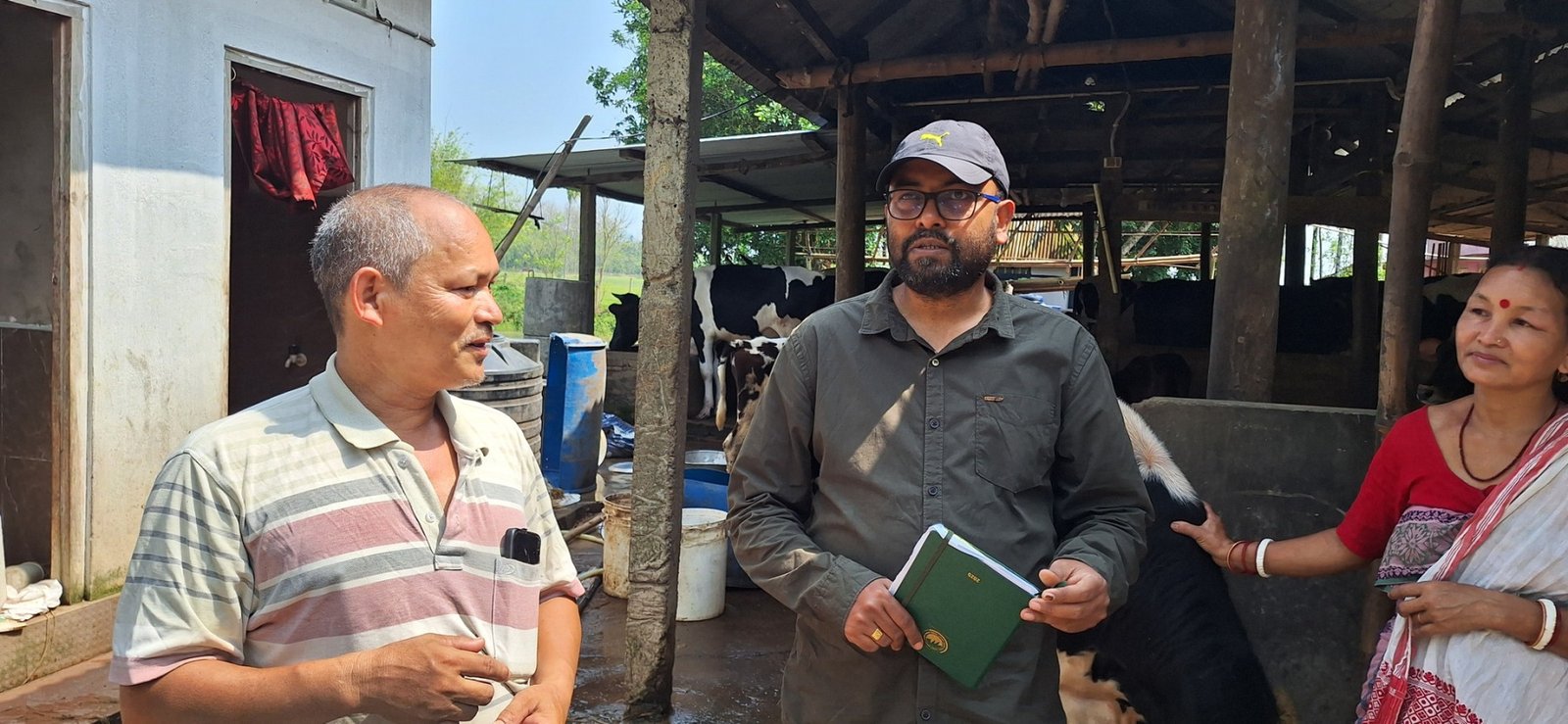
As part of the Strategic Planning Exercise that P-Green Solutions is facilitating for the Centre for Microfinance & Livelihood (CML) — an associate organization of Tata Trusts working across Assam, Tripura and Manipur — two days were spent in the field with CML’s programme staff, visiting live project sites in Kamrup Rural and Nalbari districts. The purpose was to ground the ongoing visioning and Theory of Change exercise in first-hand evidence from CML’s two largest thematic verticals: Livelihood Promotion, and Water, Sanitation & Hygiene (WaSH). What follows are our observations from the field.
| Dates | 22–23 April 2026 |
|---|---|
| Districts Covered | Kamrup Rural and Nalbari, Assam |
| Thematic Focus |
Day 1: Livelihoods & Allied Agriculture Day 2: Water Security & Quality / WaSH |
| Purpose | On-ground validation for CML’s 2026–2031 Strategic Plan |
Day One: Livelihoods on the Ground in Boko
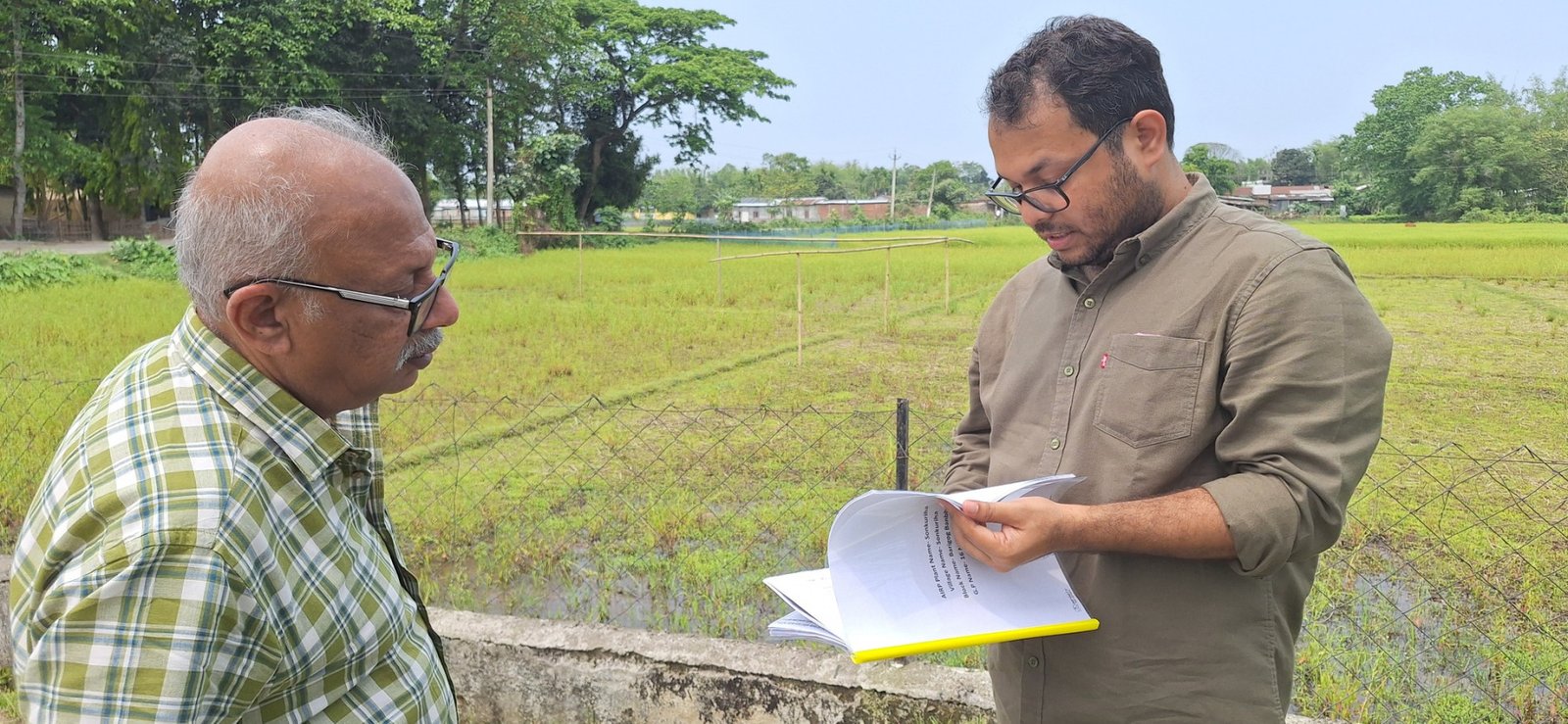
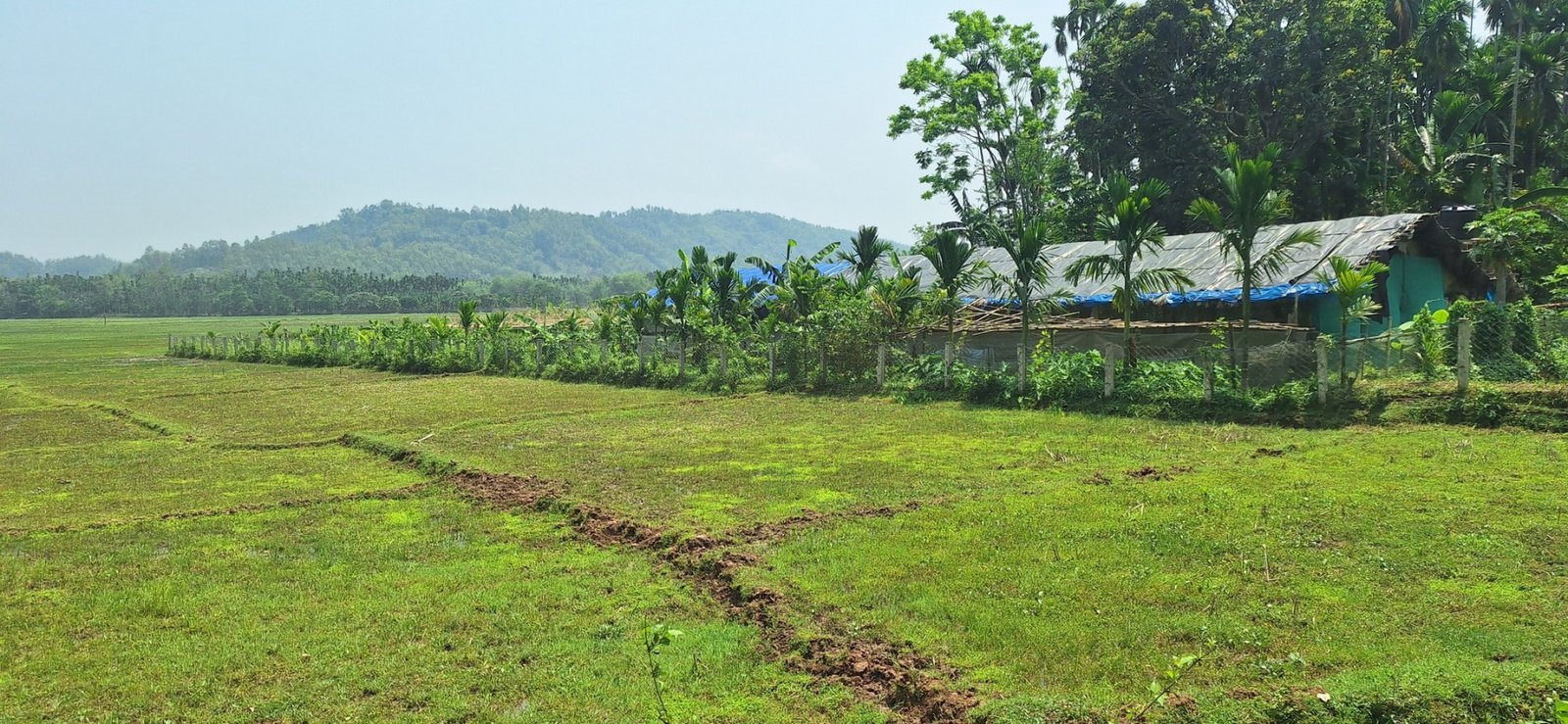
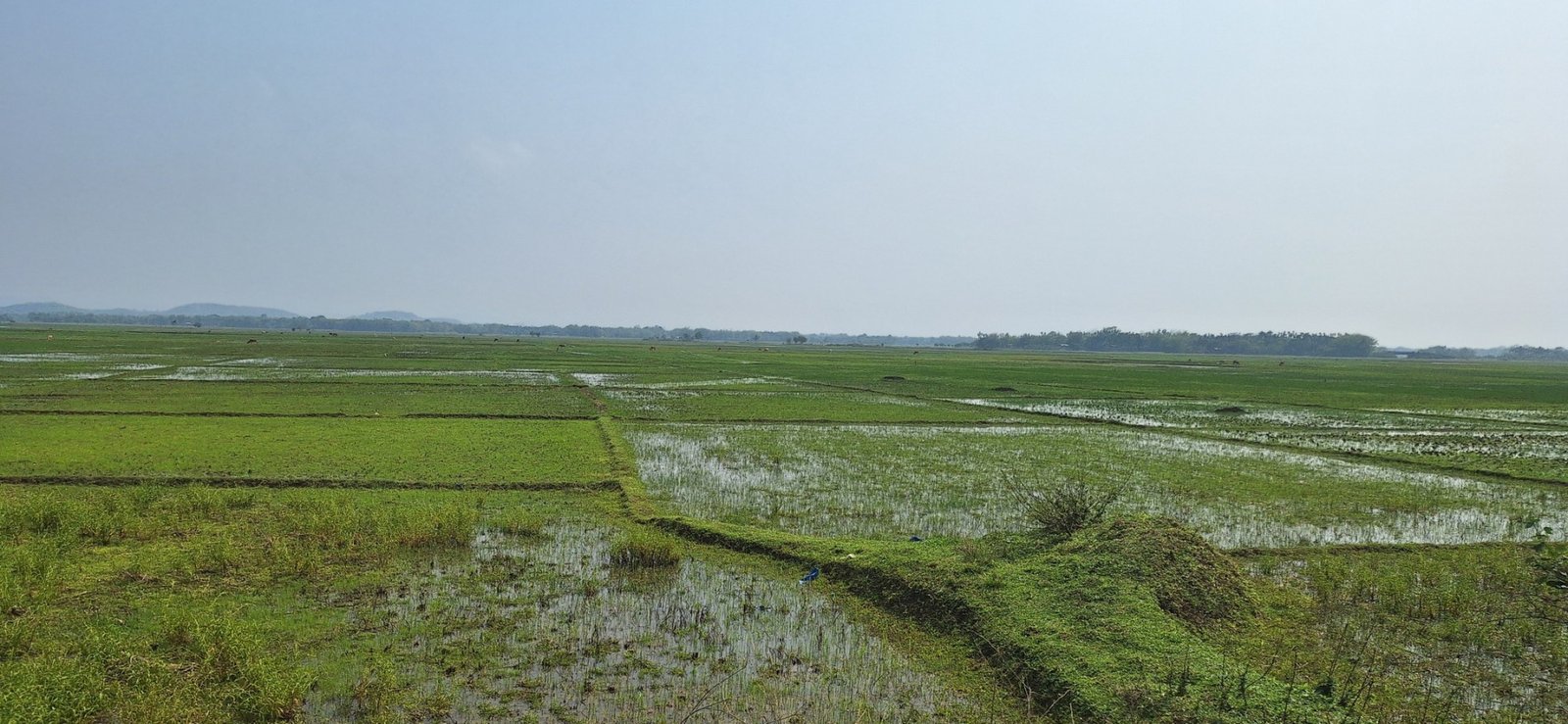
The first day took the team to Boko block in Kamrup Rural, one of CML’s longest-running livelihood sites and now in its third phase of implementation. Moving between villages, we sat with farming households to understand how income is actually built at the household level, beyond what shows up in project reporting.
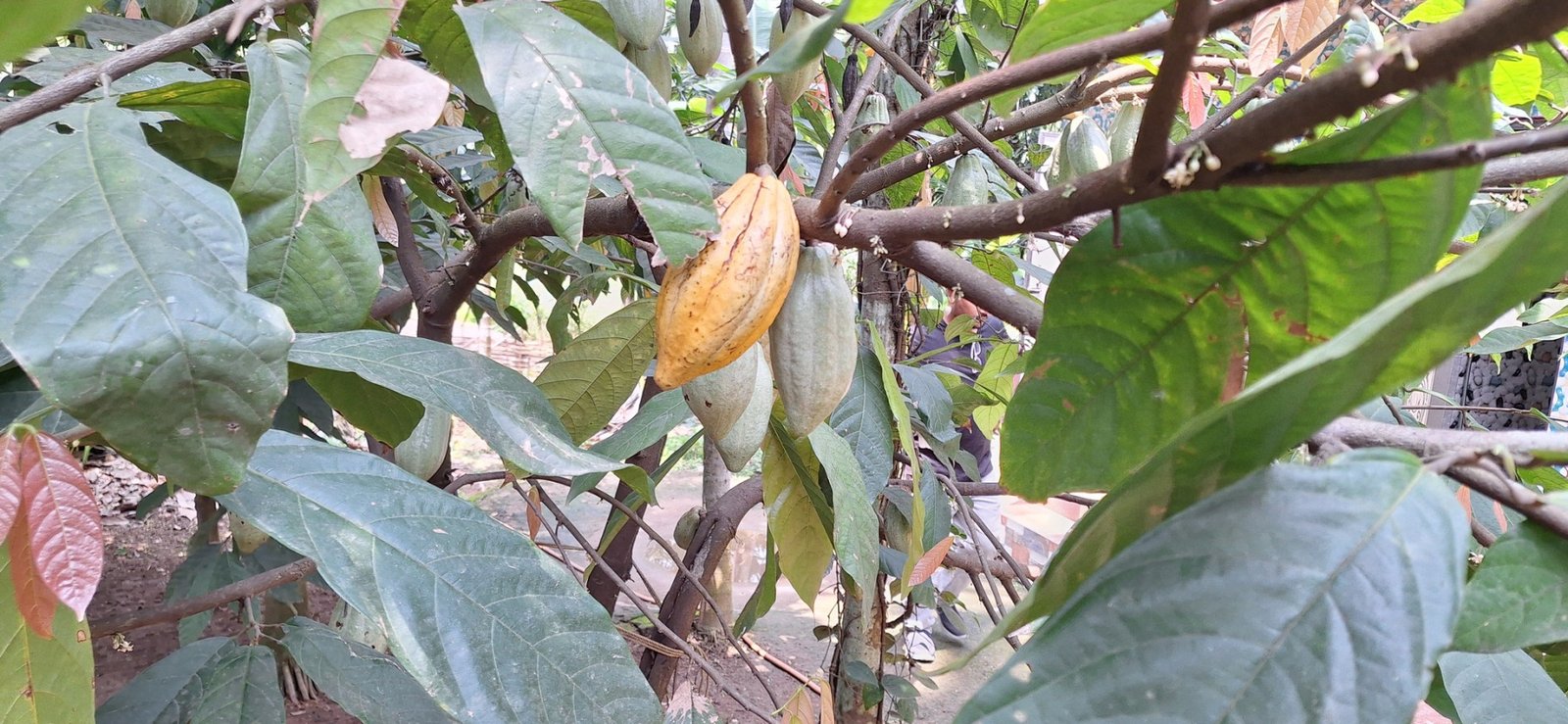
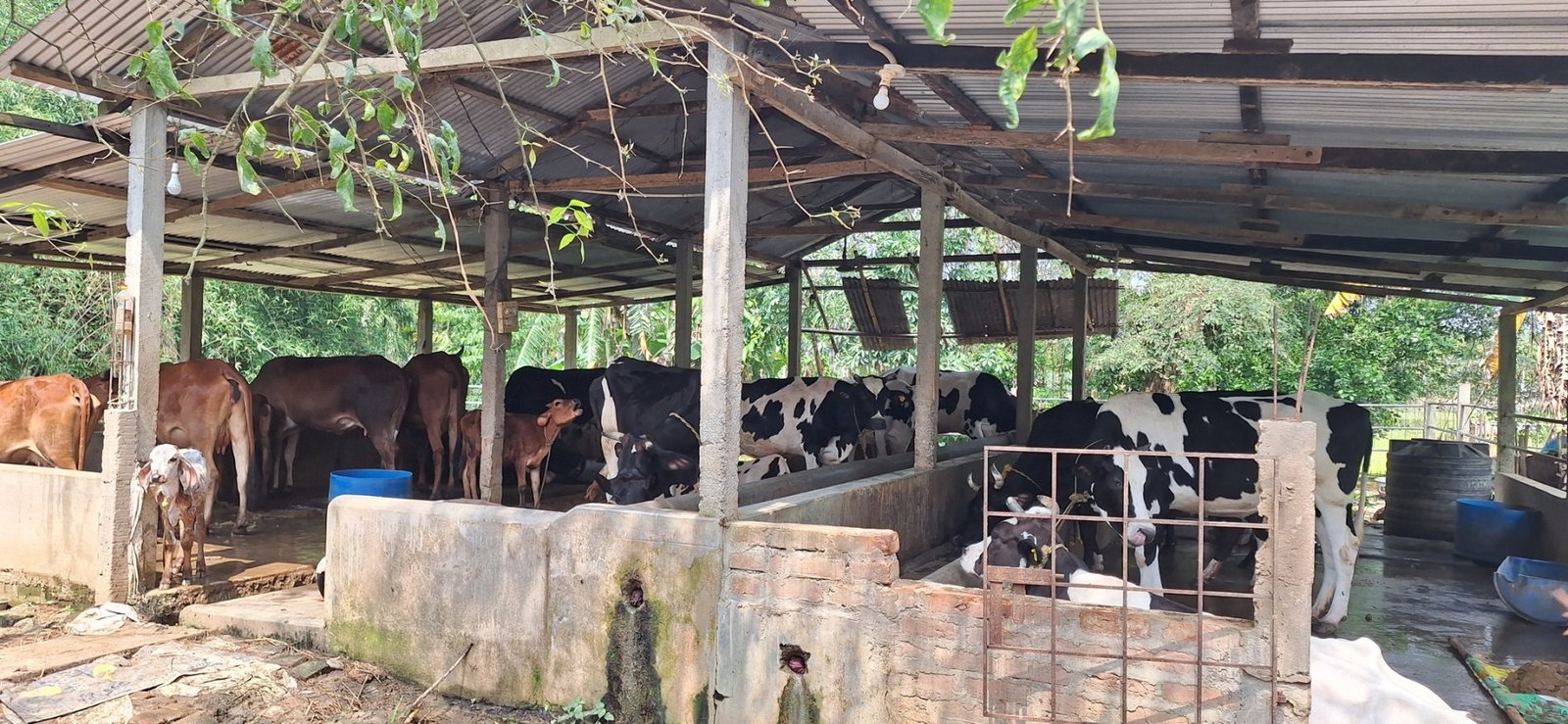
Areca nut, cocoa and black pepper are becoming meaningful secondary sources of household income, grown as intercrops on small homestead plots — value chains CML believes are worth deepening rather than simply monitoring at this stage. On the livestock side, several households have taken up dairying with ASLRM support, typically two or three cross-bred cows housed in a modest shed. Milk retails at roughly Rs 50–60 a litre in the Boko market, yet the fixed price paid to the farmer at the point of collection is closer to Rs 32 — a gap that raises real questions about where in the value chain is best placed, and whether current collection and last-mile logistics are working for producers.
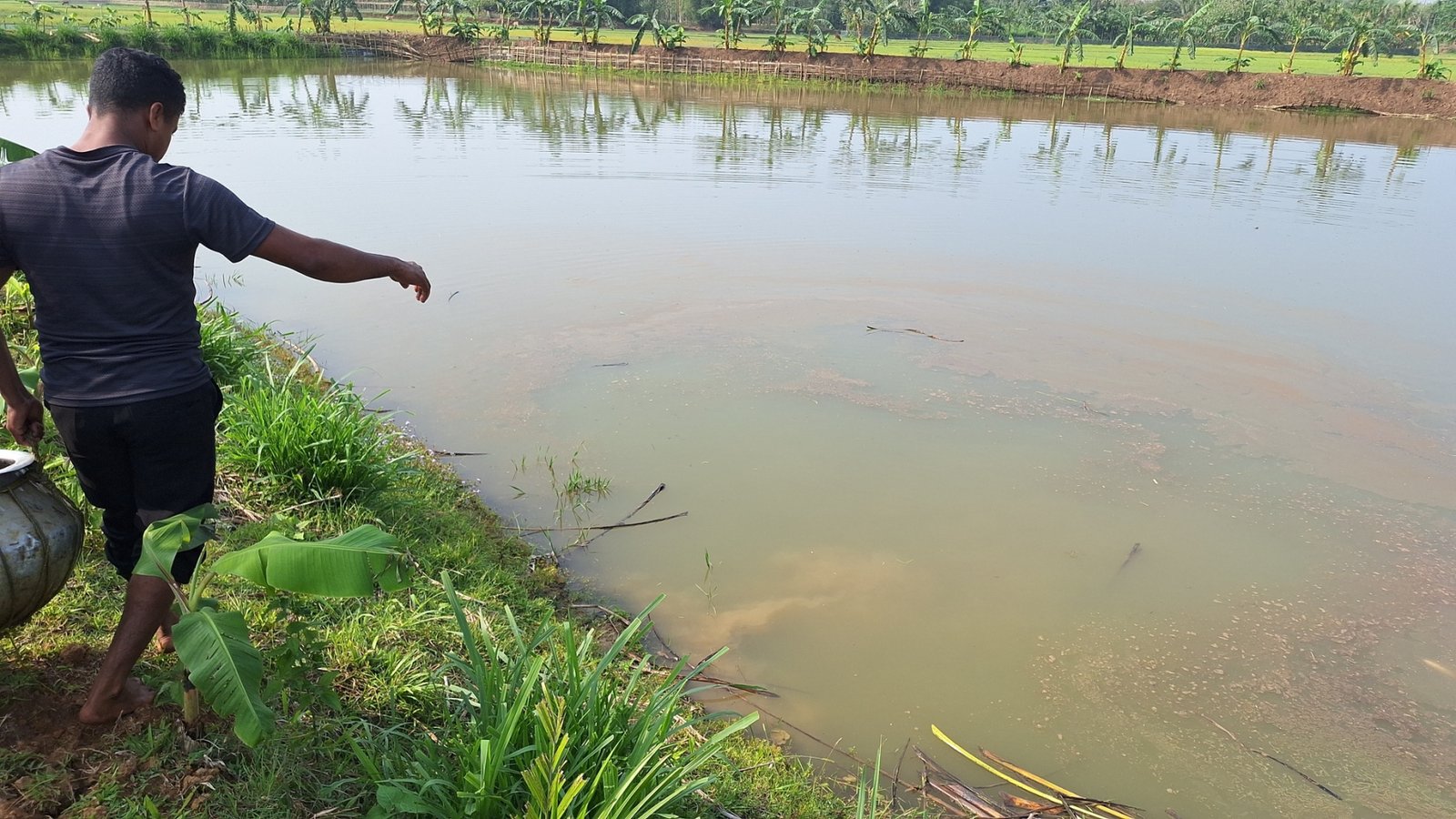
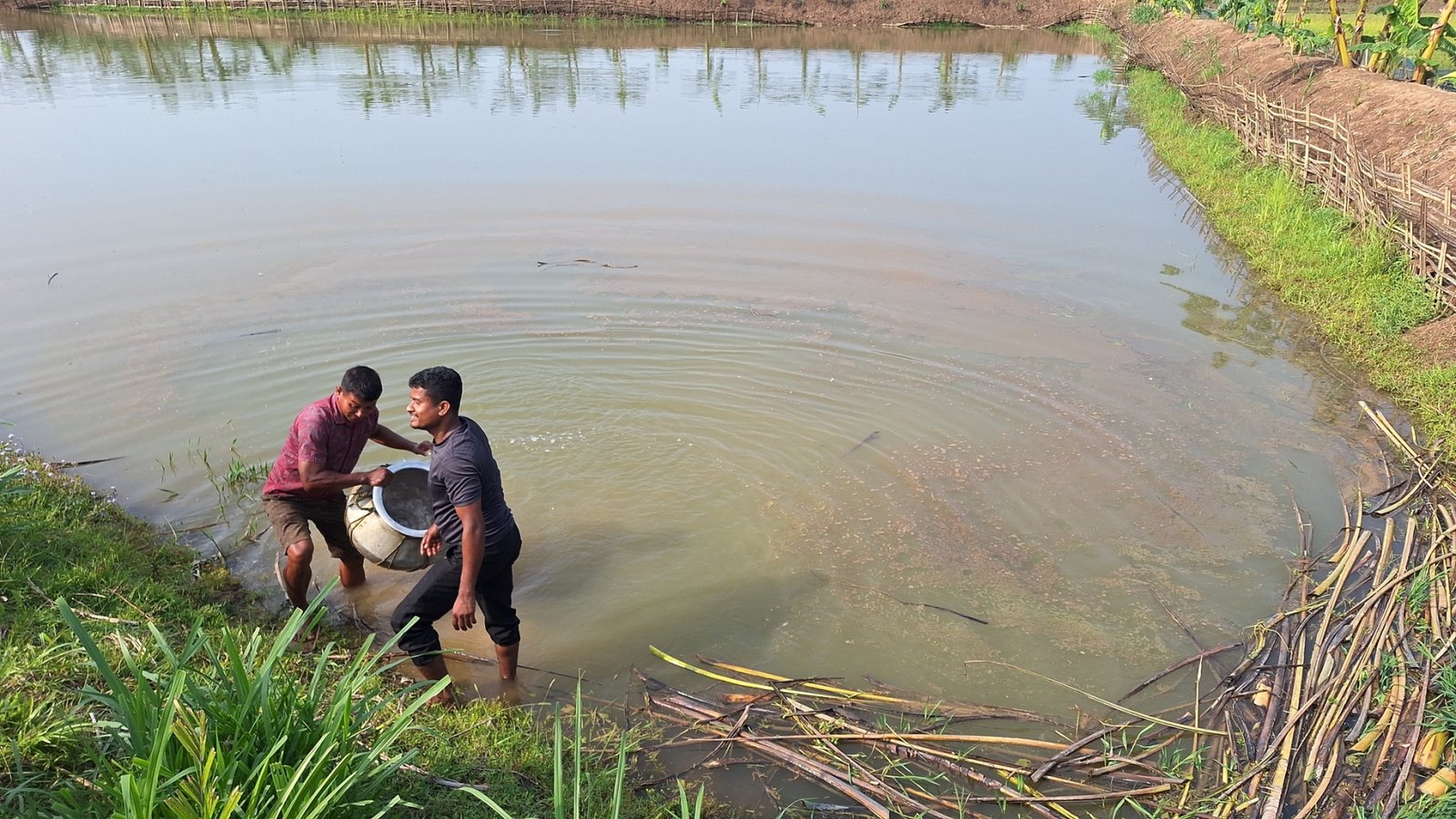
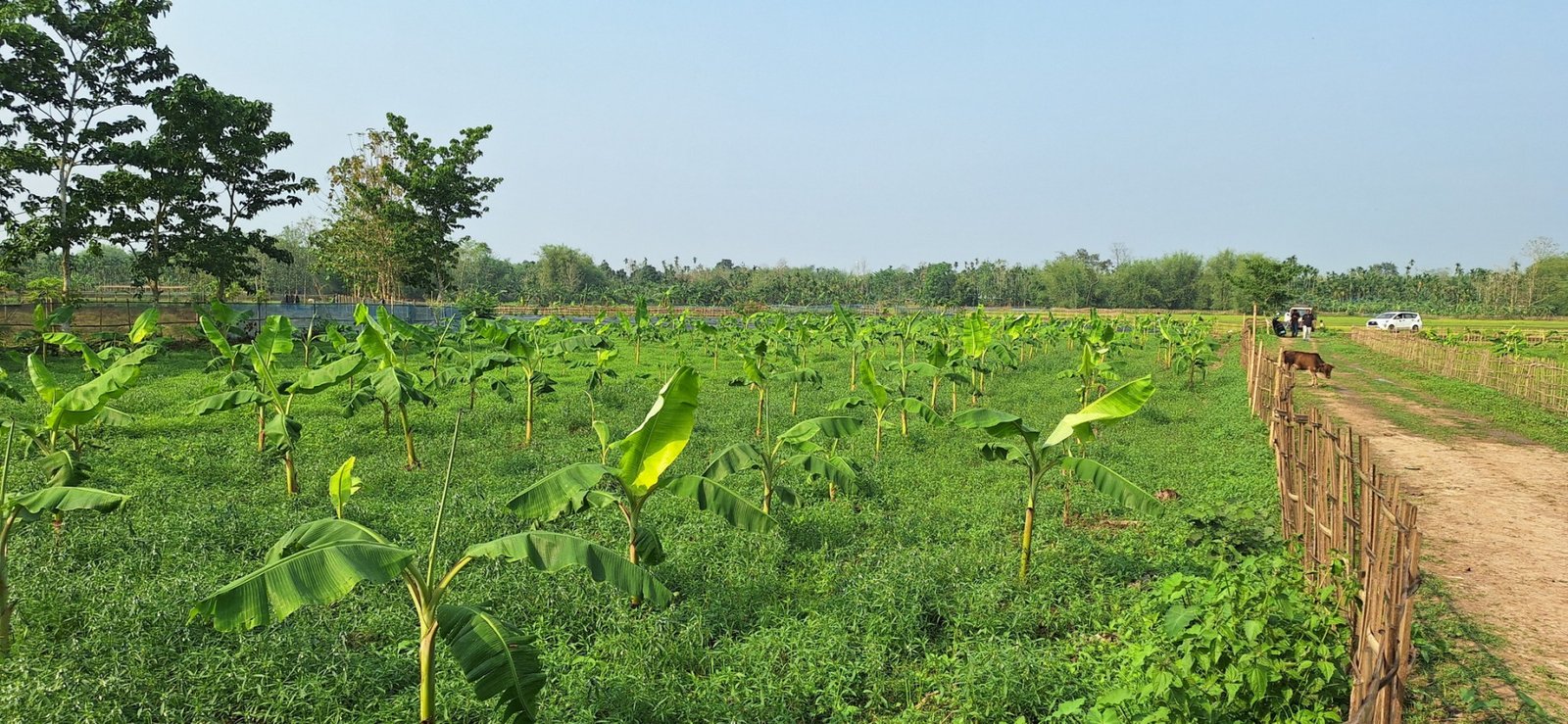
Poultry follow a similar pattern: promising as household income sources, but largely organized around contract-farming arrangements in which the contractor supplies inputs and buys back output, leaving farmers with a thinner and less predictable margin. Fishery, by contrast, looked like a genuinely low-cost addition to the household economy — families stock ponds with fingerlings bought from local hatcheries and harvest for both consumption and sale, with little additional investment required. We also saw newly planted banana plots being taken up as a further diversification option, on land that would otherwise lie idle between paddy seasons.
The broader takeaway from Boko was less about any single value chain and more about sequencing: CML has clearly proven it can mobilize households into a range of allied-agriculture activities. The next phase of work needs to go deeper into value chains — collection, aggregation, pricing — rather than wider into new activities, before the Boko model is replicated elsewhere in the state.
Day Two: Water Security in Nalbari
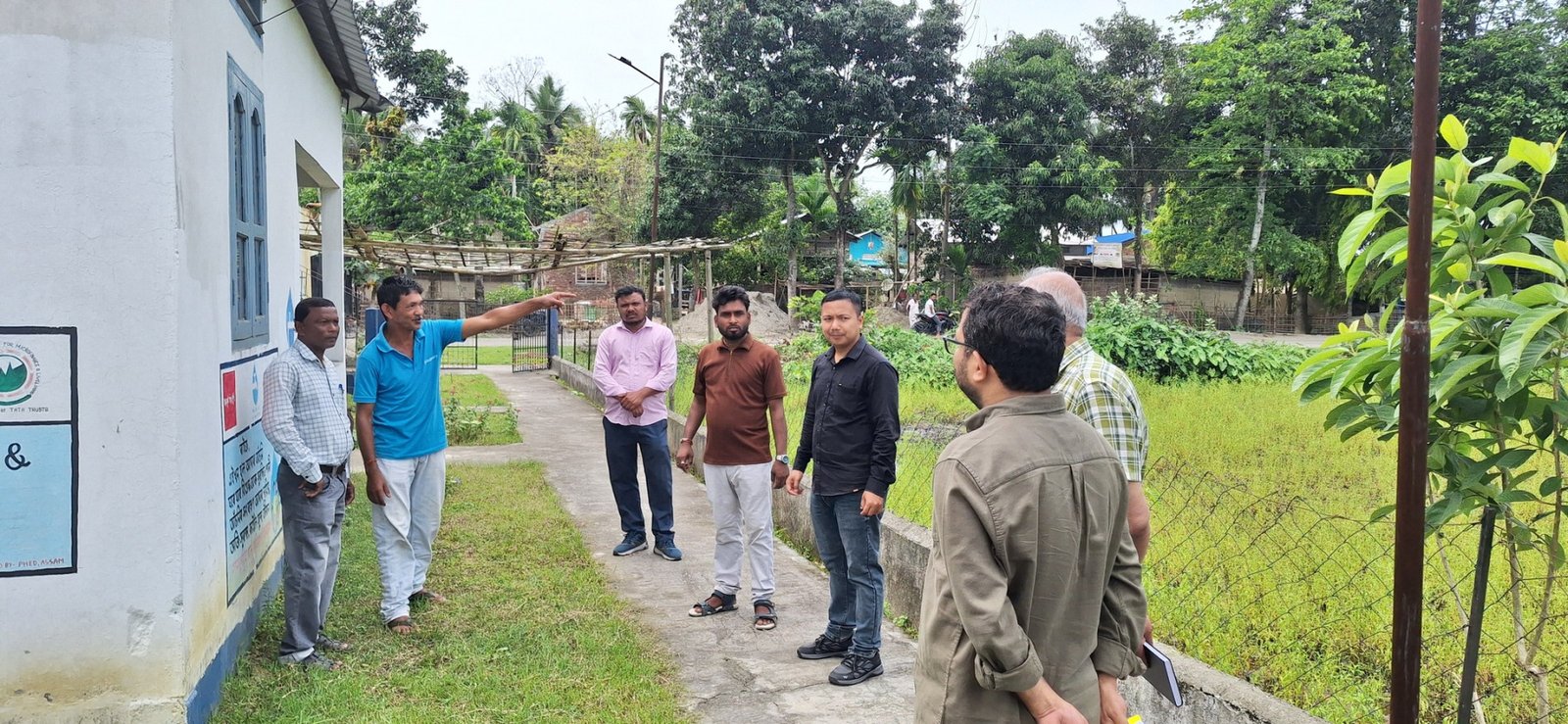
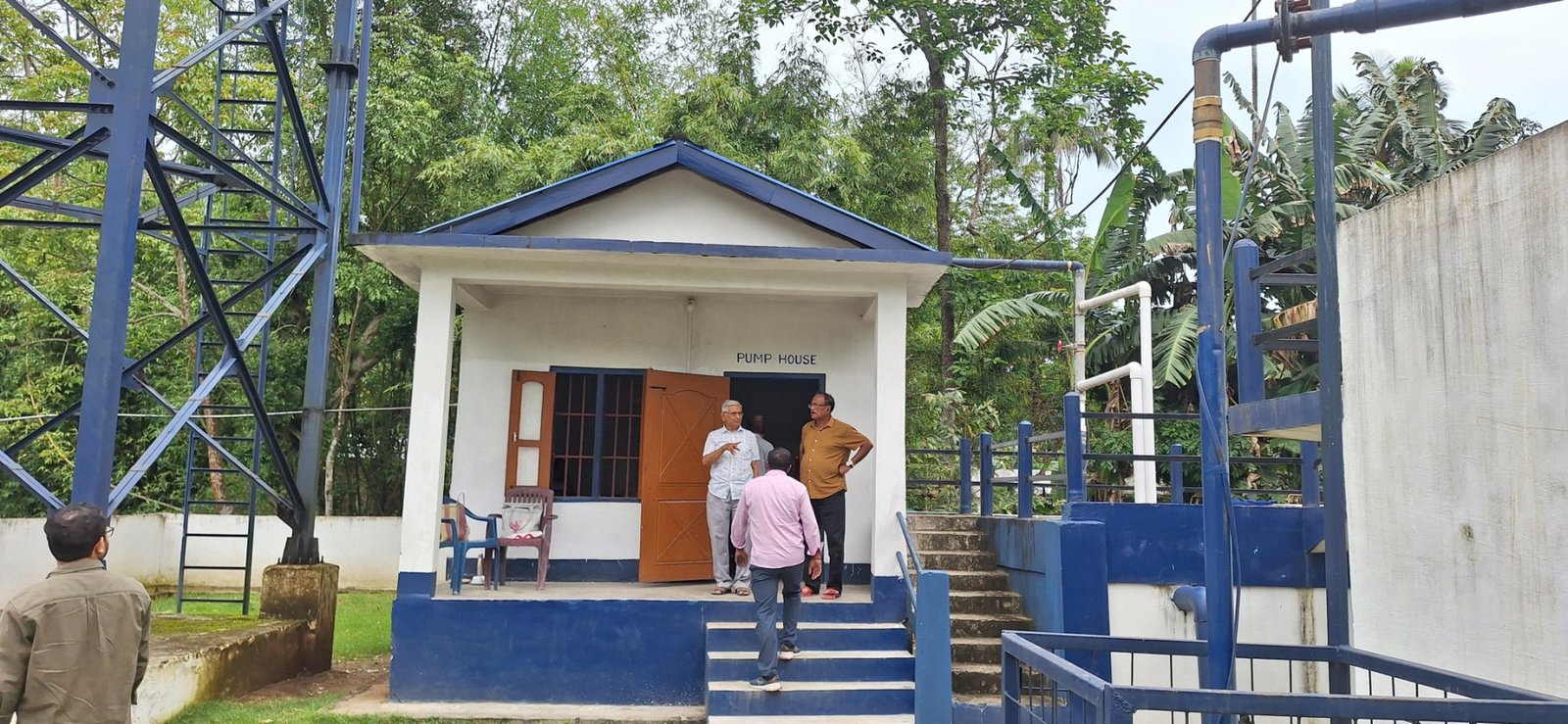
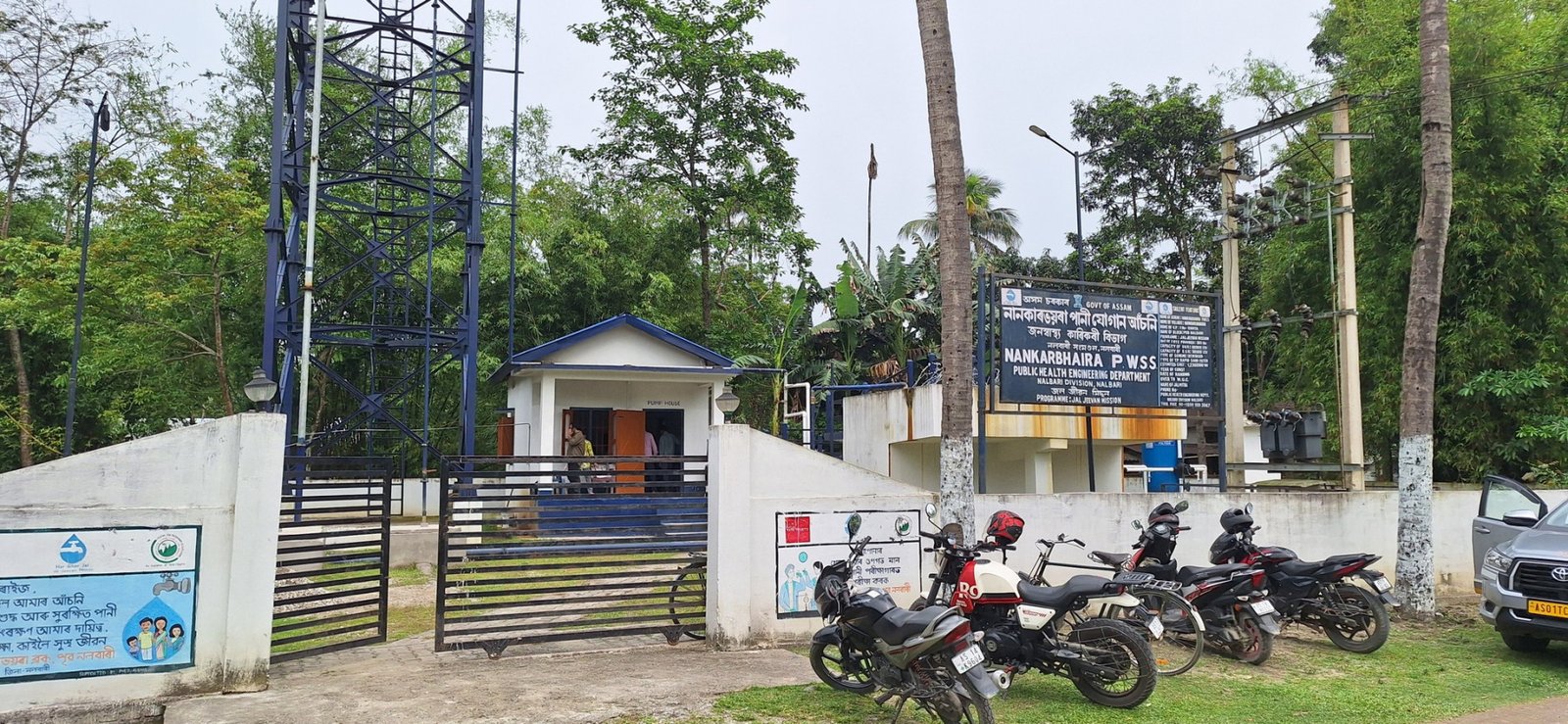
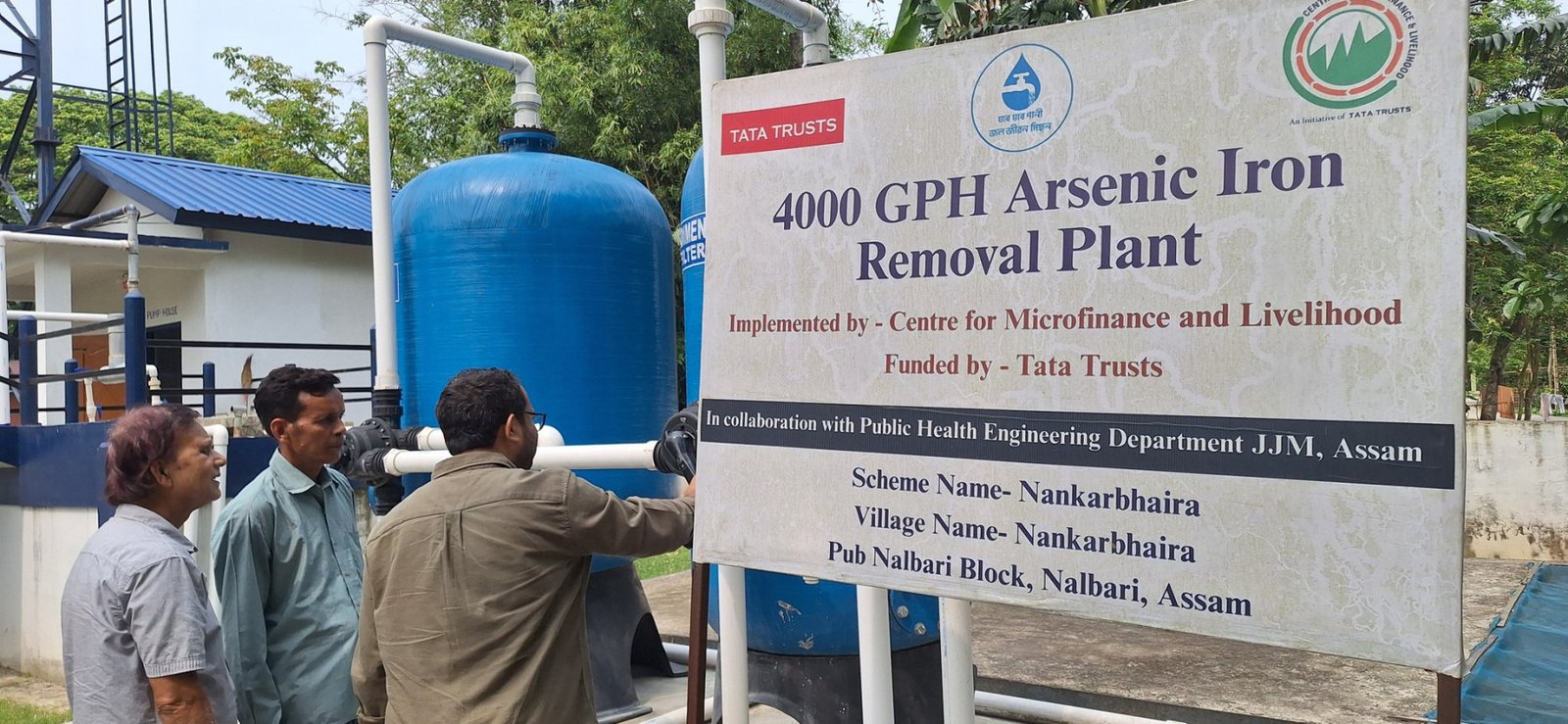
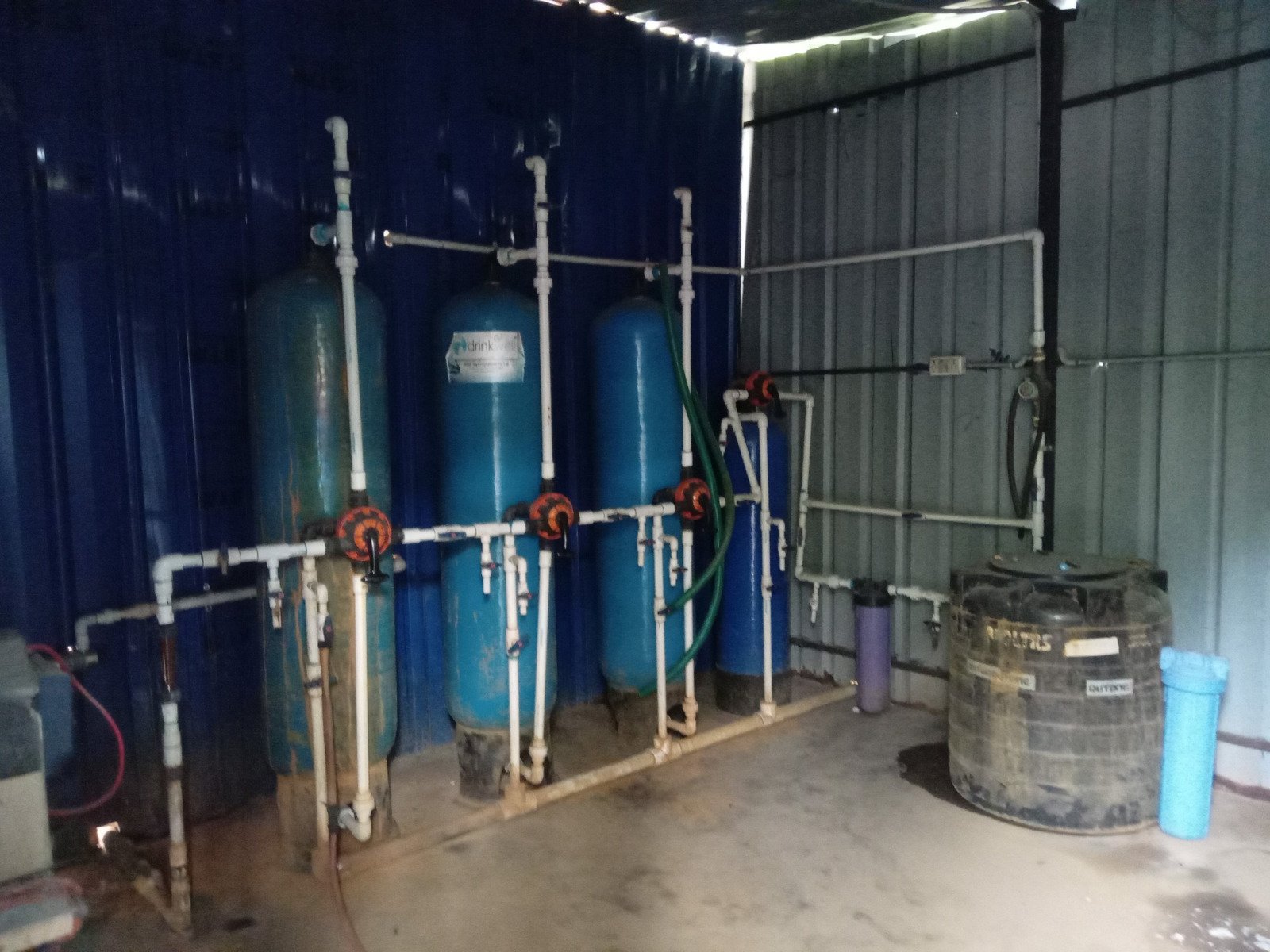
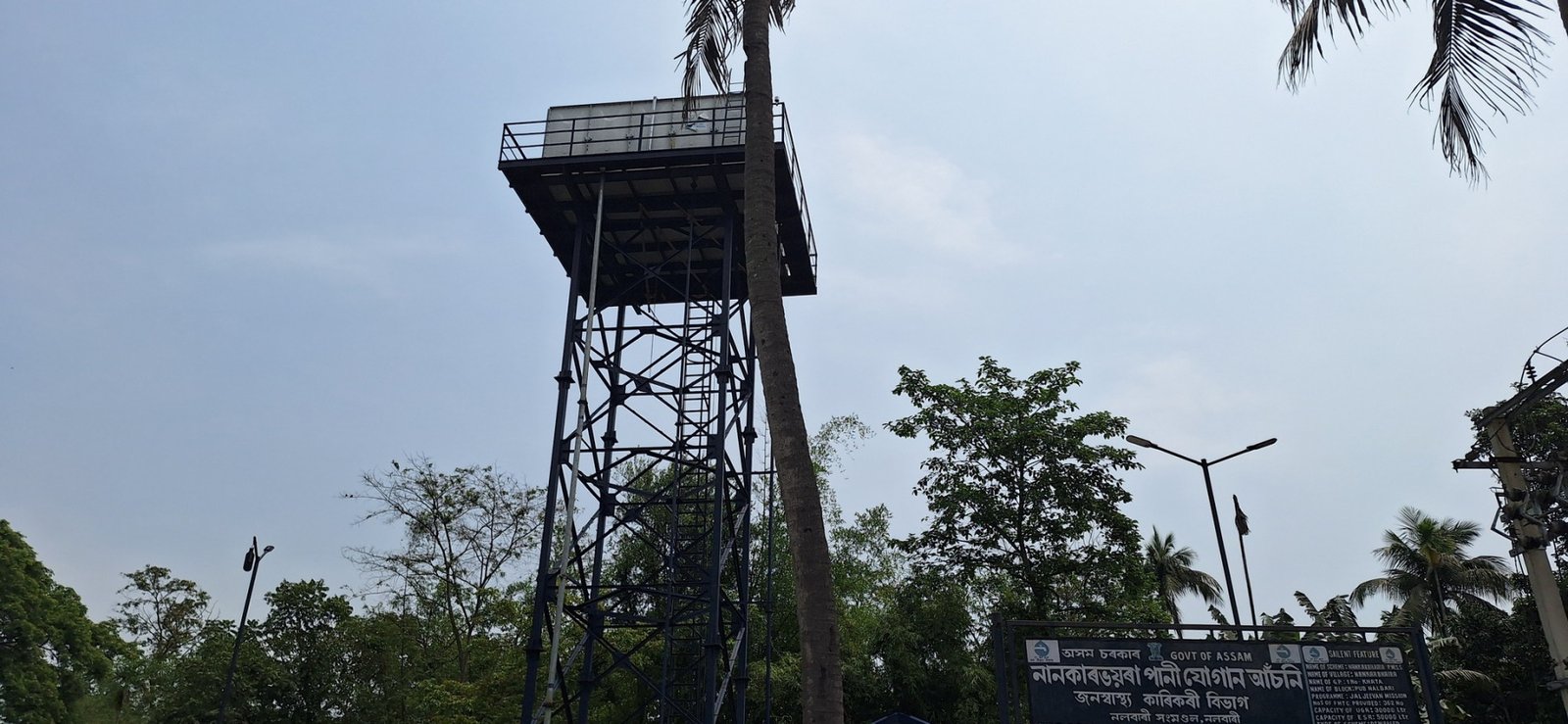
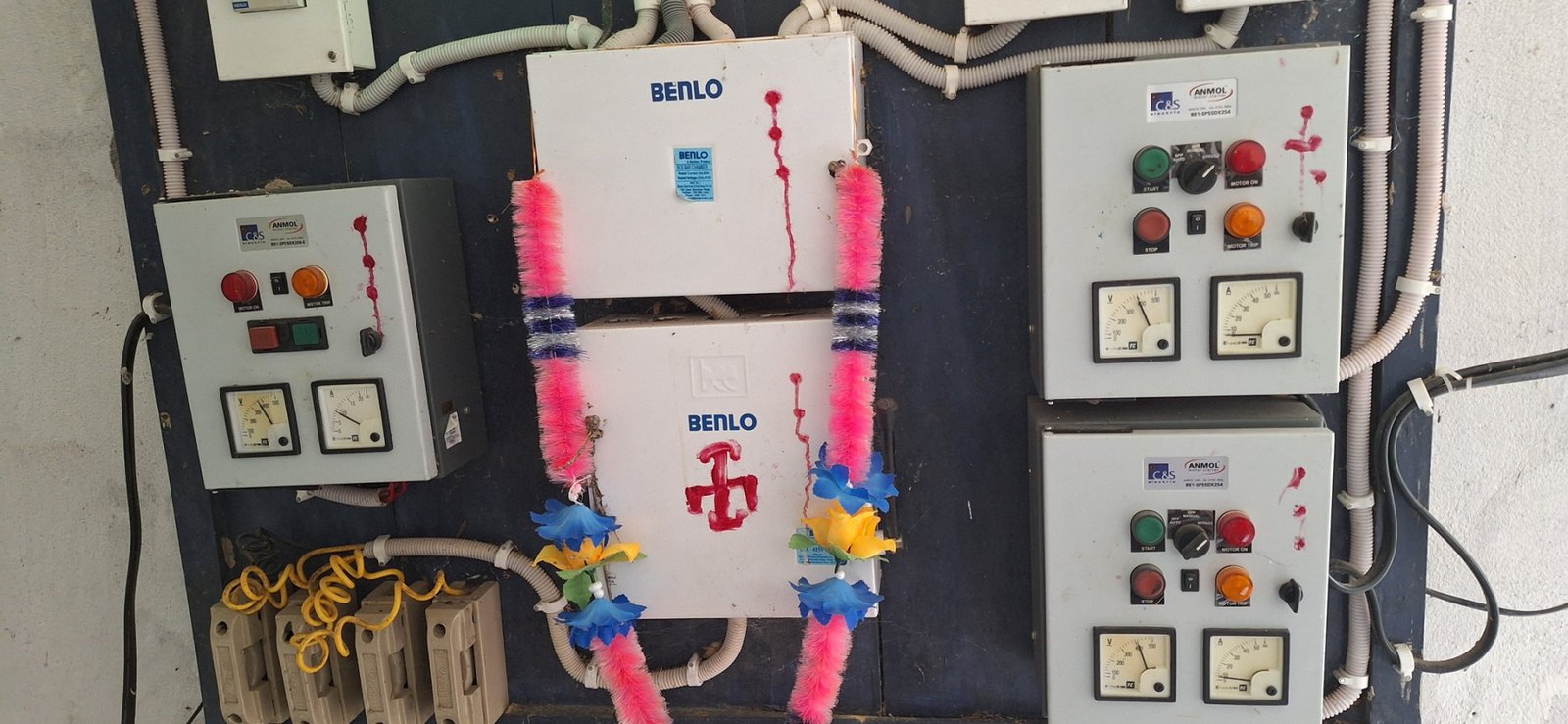
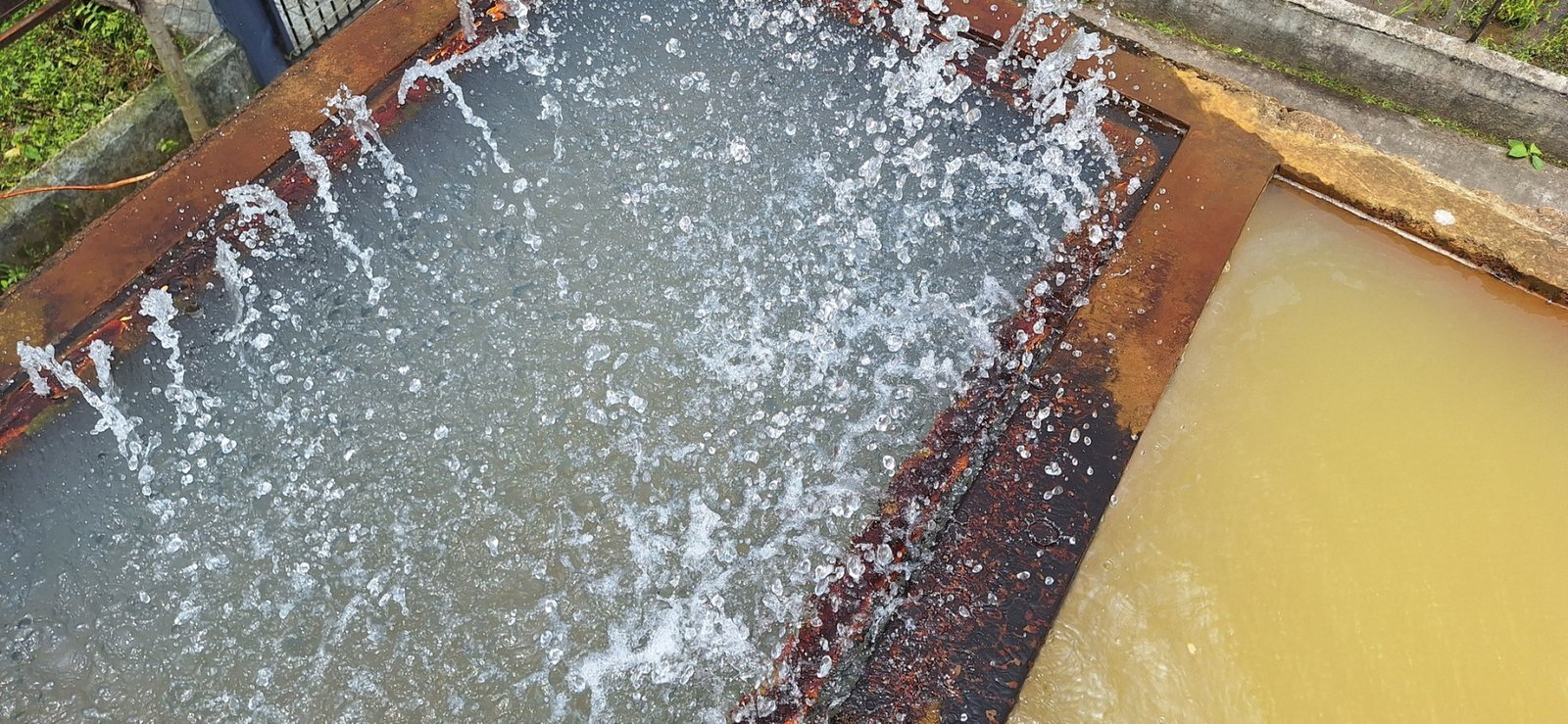
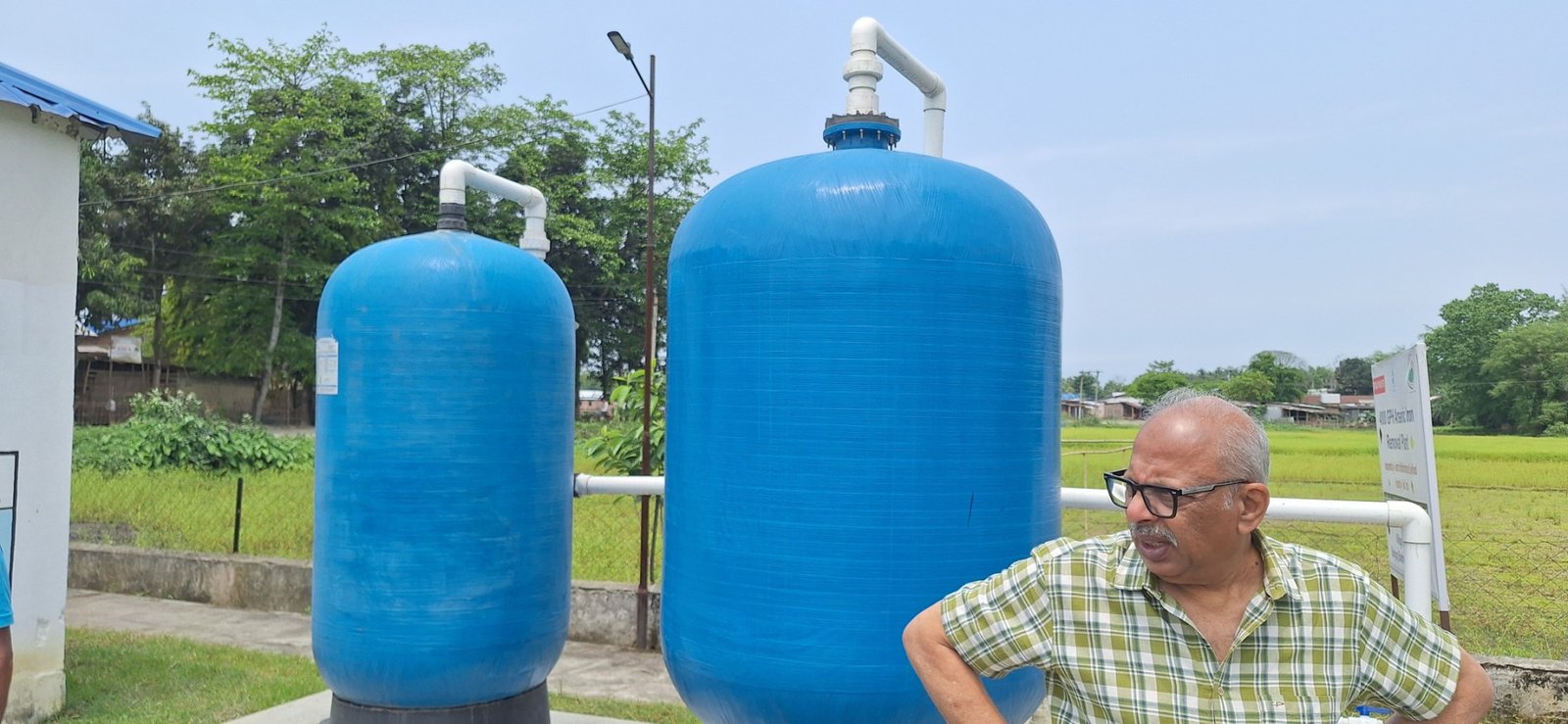
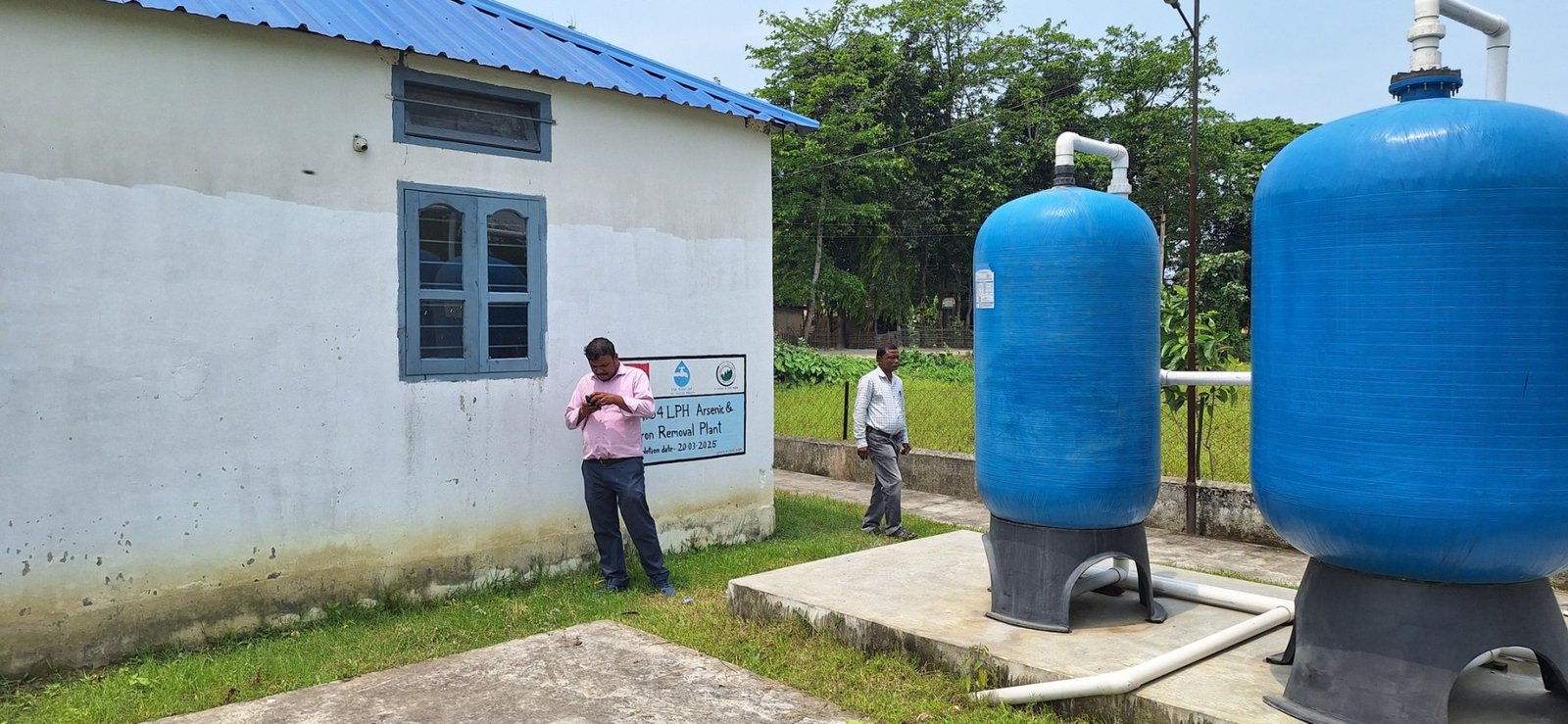
The second day shifted focus to Nalbari district, where CML’s WaSH programme addresses a different, and in some ways more structurally difficult, problem: groundwater with high iron and arsenic content across large parts of the district. In villages such as Nankarbhaoria, the team visited a Jal Jeevan Mission (JJM) piped water scheme — complete with an elevated storage reservoir and a recently commissioned Arsenic and Iron Removal Plant — where CML has supplemented state infrastructure with treatment, in-line chlorination.
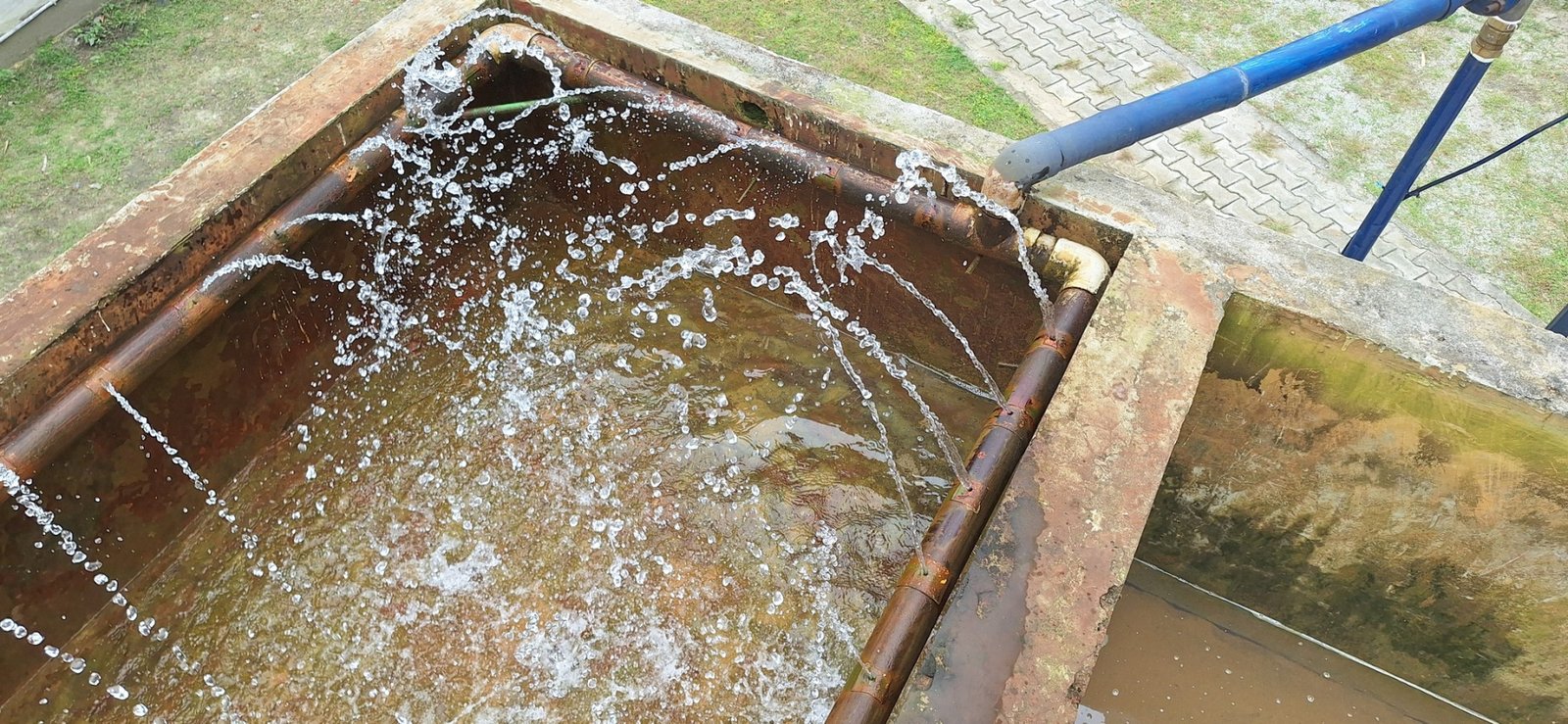
On paper, these schemes look complete: source, treatment, storage and household tap connections are all in place. In practice, several structural issues stood out. Roughly half of connected households are not paying their water charges regularly, which limits what panchayats and scheme operators can spend on upkeep. Storage capacity at more than one scheme is not sufficient for the population served, so pressure and supply hours taper off well before reaching tail-end households — and what does arrive there often carries a weaker chlorine residual, with leakages raising the risk of contamination re-entering the network. Iron-removal units, largely slow-sand filters, silt up quickly given the raw water quality and need continuous pumping and frequent servicing to stay functional; arsenic-removal units likewise depend on near-continuous operation to keep pace with demand at the far end of the network.
None of this reflects a design failure so much as an operations-and-maintenance one: schemes are formally owned by panchayats, but day-to-day technical support still runs through the state Public Health Engineering Department (PHED), and full cost recovery from user charges remains some way off. This leaves CML’s supplementary role at something of a crossroads — continuing to prop up scheme-level operations indefinitely is not a sustainable use of programme resources, whereas household- and kiosk-based water treatment and distribution models looked, from what we saw, like a more scalable complement to state infrastructure than a substitute for it.
What This Means for the Strategic Plan
- Livelihoods: the Boko experience is mature enough to become a template — but only once CML has worked through value-chain gaps in dairy, poultry and piggery, vegetables, pepper, etc. particularly around pricing and aggregation, before scaling the model to new geographies.
- WaSH: CML’s comparative advantage may lie less in extending or maintaining JJM-linked infrastructure, and more in household- and community-level water quality interventions, technology piloting, and strengthening the capacity of state agencies to sustain what they already own.
- Across both verticals: the visit reinforced the case for CML to position itself as a resource and knowledge partner to state government programmes, rather than solely as a direct implementer — a theme the ongoing Theory of Change exercise is now working through in detail.
About CML: Centre for Microfinance & Livelihood is an associate organization of Tata Trusts working on livelihoods, WaSH and education across Assam, Tripura and Manipur.
About P-Green Solutions: Pandhi Green Solutions & Innovations Pvt. Ltd. (P-Green Solutions) is a Dehradun-based development sector consulting firm working on livelihoods, water and agriculture programme design, strategic planning and DPR preparation.